

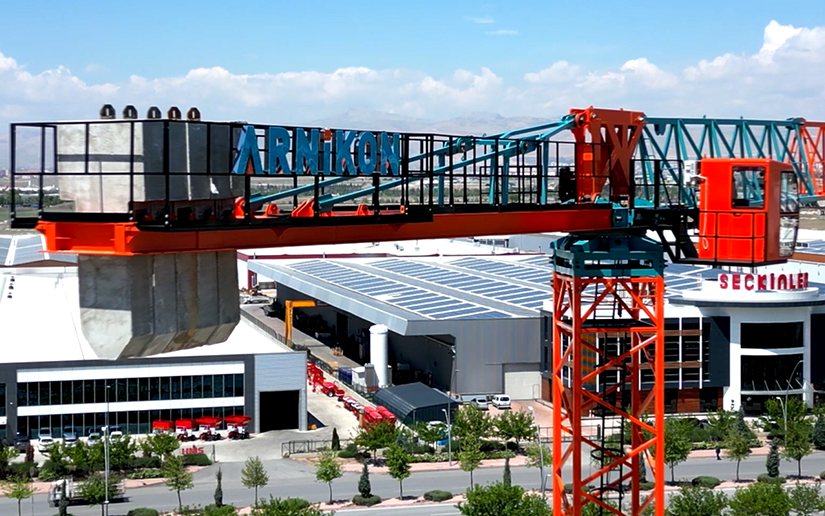
Next-Generation Automation and Safety Systems in Tower Cranes
The machine at the highest point of a construction site is no longer just a lifting device; it is a smart system that produces data, supports decisions and warns of risks before they happen.
Introduction
Tower cranes are indispensable on modern construction sites. From high-rise buildings to infrastructure projects, they get materials to the right place at the right time. Yet when not managed properly, the same machines become one of the biggest sources of risk on site: overload, wind, collision, operator error, poor maintenance and signal/communication failures can all lead to serious accidents.
In recent years, advances in sensor technology, PLCs and embedded controllers, wireless communication and artificial intelligence have fundamentally changed tower crane automation. In this article we look at what next-generation automation and safety systems offer, how they work and what to watch out for on site.
01From conventional safety systems to smart systems
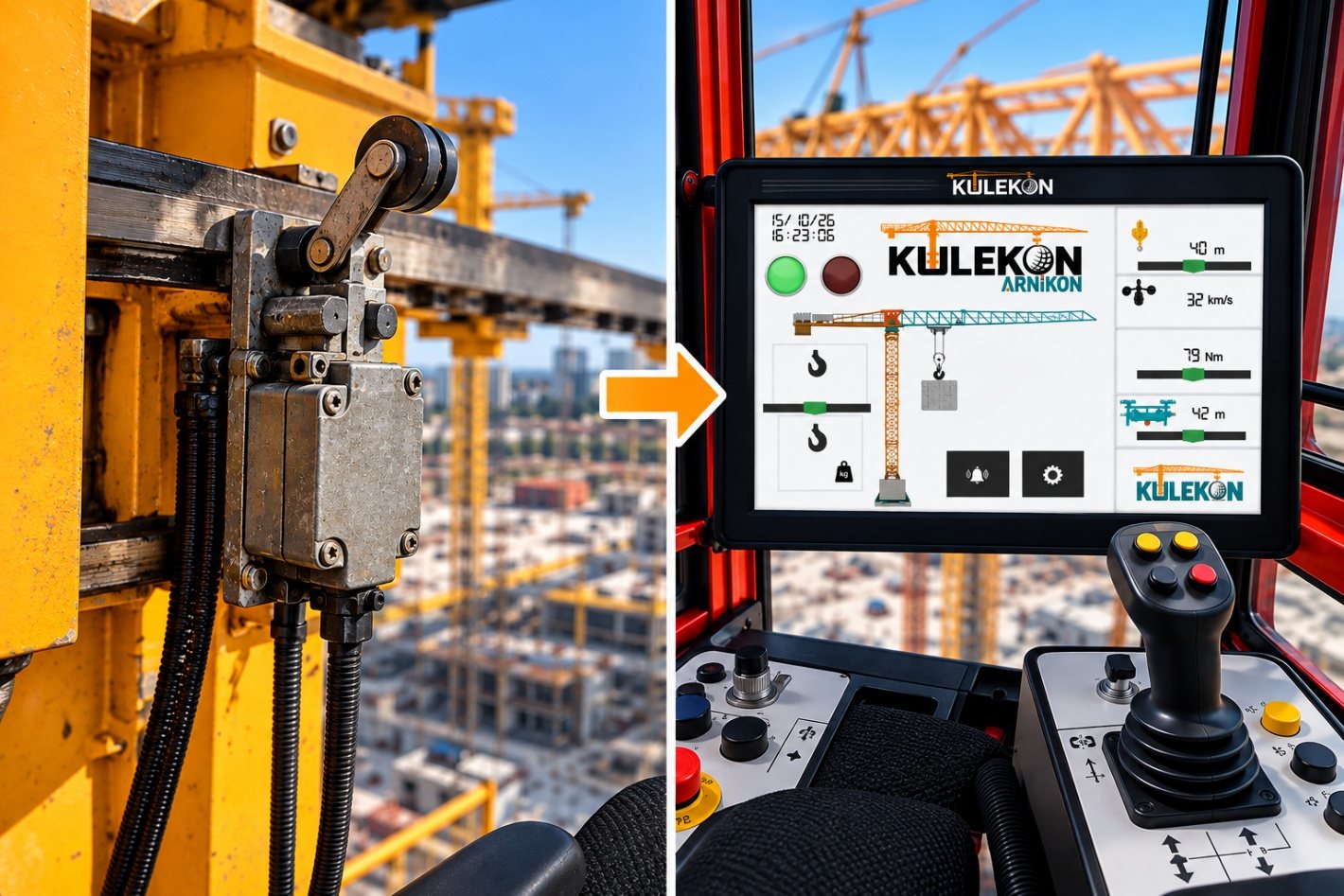
Conventional tower crane safety relied largely on mechanical and electromechanical components: limit switches, mechanical load limiters and the operator’s experience. This approach is still the basic safety layer, but on its own it is no longer enough. Next-generation systems stand out in the following ways:
- Layered rather than single-point protection: sensors, controller, software limits and operator interface work together.
- Predictive rather than reactive: the system warns as a limit is approached, not after it is exceeded, and limits motion smoothly.
- Logging and traceability: every lift, alarm and intervention is recorded, making post-incident analysis possible.
02Core safety functions
Load moment limiter (LMI / load moment indicator)
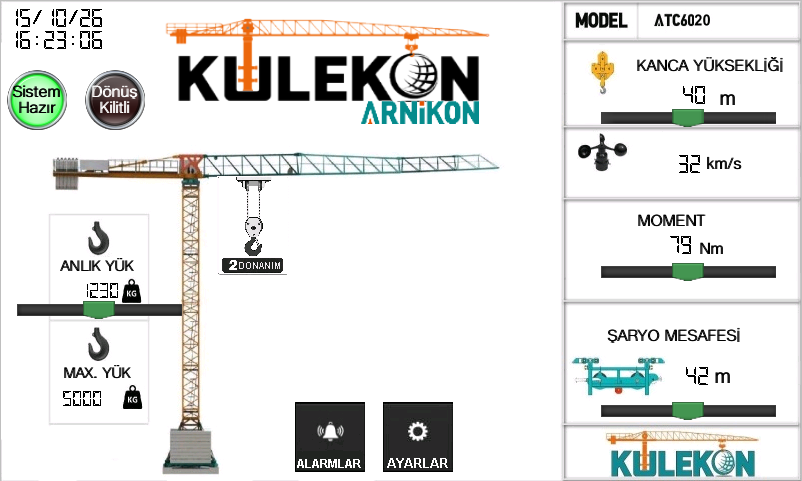
The most critical protection on a tower crane is load moment limiting, which evaluates the load together with the jib radius. In next-generation systems, load cell, radius sensor and controller data are processed in real time; the load, percentage of capacity and remaining safety margin are shown clearly on the operator display. As capacity is approached, an audible and visual warning is given first; if the limit is exceeded, motions in the dangerous direction (hoisting up, trolleying out) are blocked.
Motion limit switches and hook height measurement
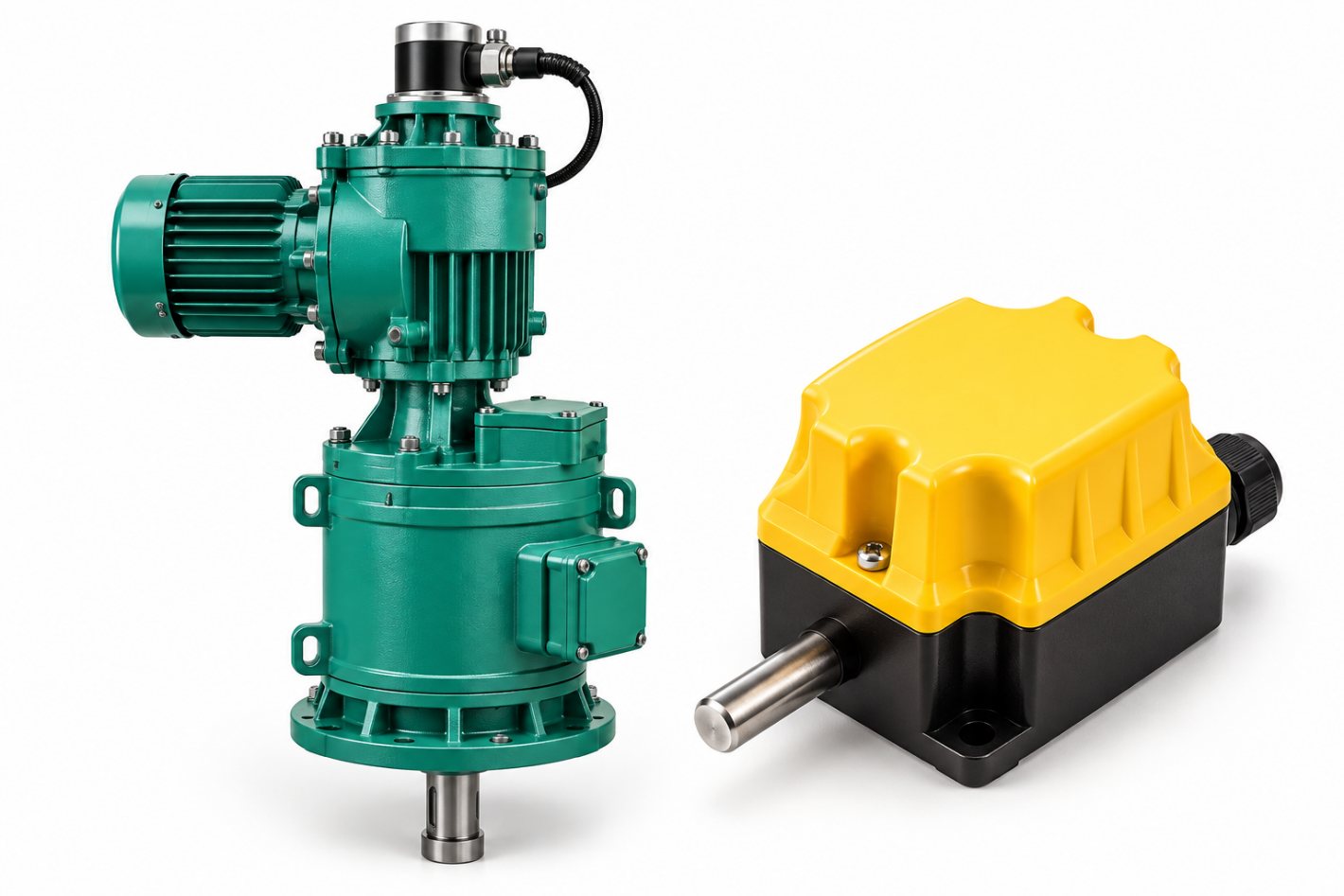
Hook height, trolley position and slewing angle are tracked with encoder-based measurement. Precise, repeatable position data makes it possible to apply limits in software and enables other automation functions. Encoder drift, signal quality and verification of the reference (home/calibration) point directly affect reliability on site, which is why periodic calibration and cross-checking (e.g. comparing the mechanical limit with the encoder value) matter.
Wind monitoring
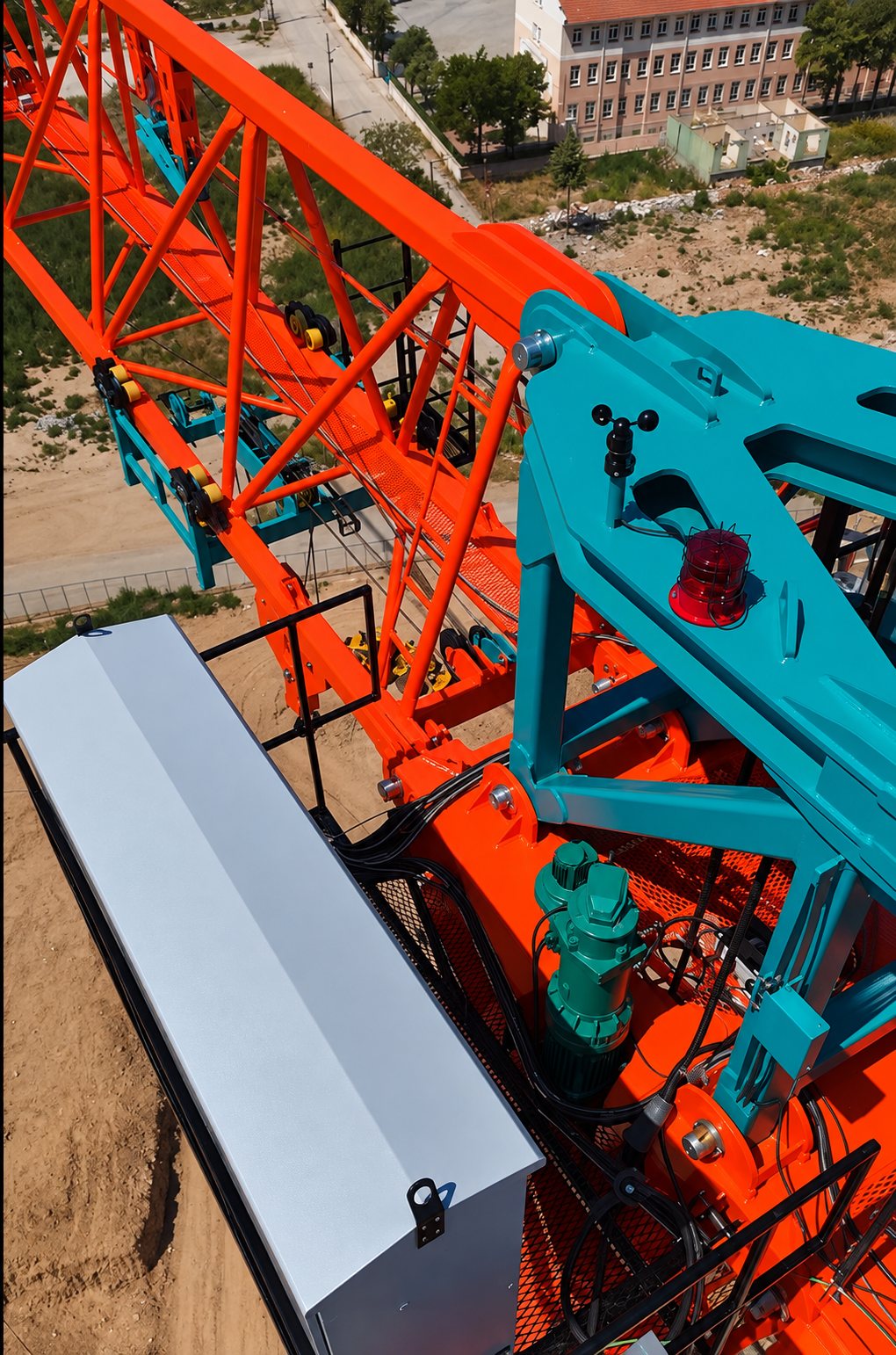
Wind speed measured by the anemometer is monitored continuously. At set thresholds a warning is given; at higher thresholds work must stop and the crane must be put into free-slewing (weathervane) mode. In next-generation systems, wind data is also combined with cloud-based weather alerts to inform site management in advance.
03Anti-collision and zoning
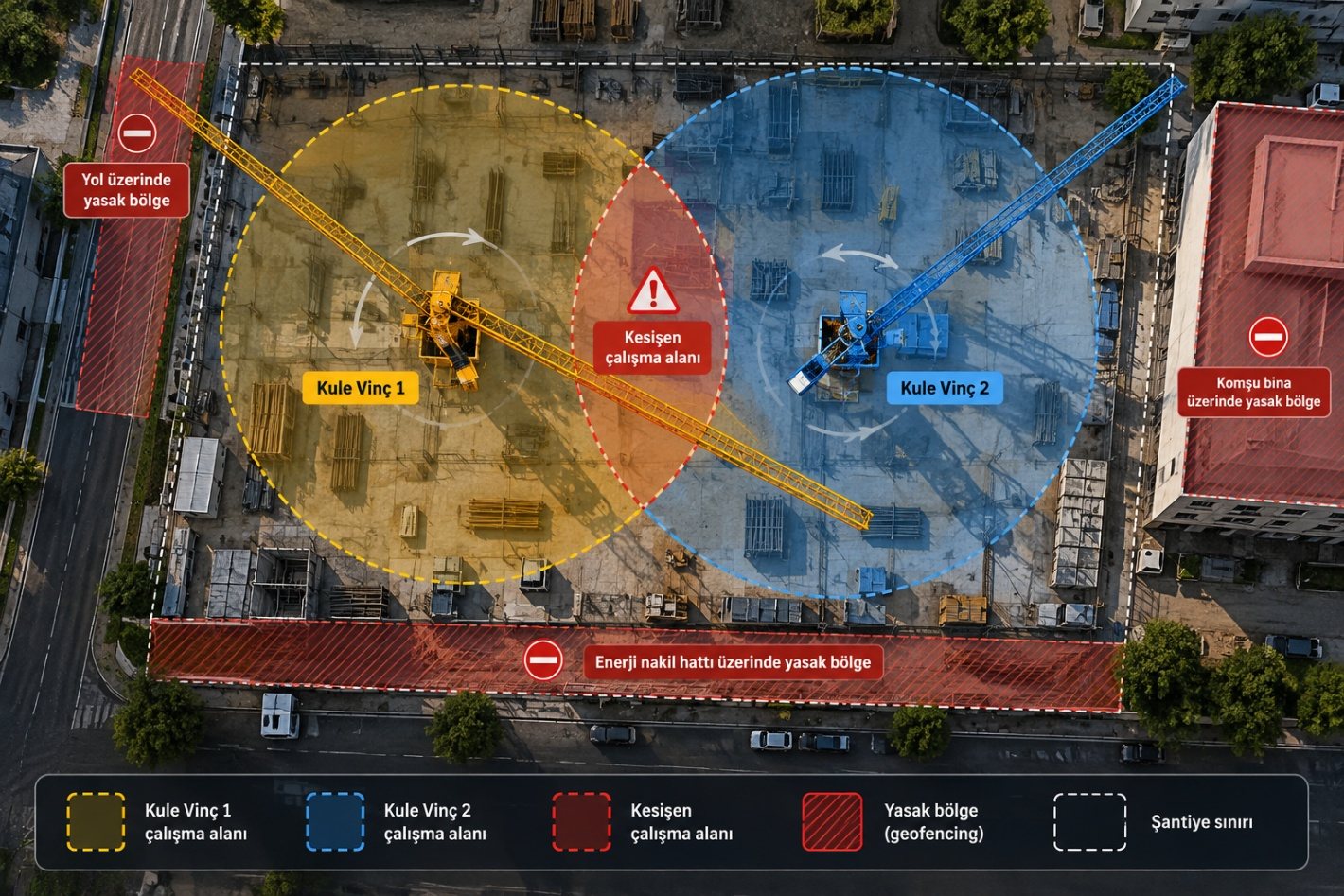
In urban projects, several tower cranes working in overlapping areas, neighbouring buildings, roads, power lines and boundary plots create serious collision risks. To manage these risks:
- Anti-collision systems: the positions of each crane’s jib, counter-jib and hook are calculated continuously. When a clash becomes possible, the system warns, slows down and, if necessary, stops.
- Geofencing / restricted zones: carrying loads over schools, roads, hospitals or power lines can be blocked in software.
- Slewing and working area limitation: the area in which the crane can physically slew is programmed specifically for the project.
These systems cover not only crane-to-crane relationships but also the relationship between the crane, the building and its surroundings. Solutions integrated with geometry from the site’s 3D model are becoming increasingly common.
04Automation: smart functions that support the operator
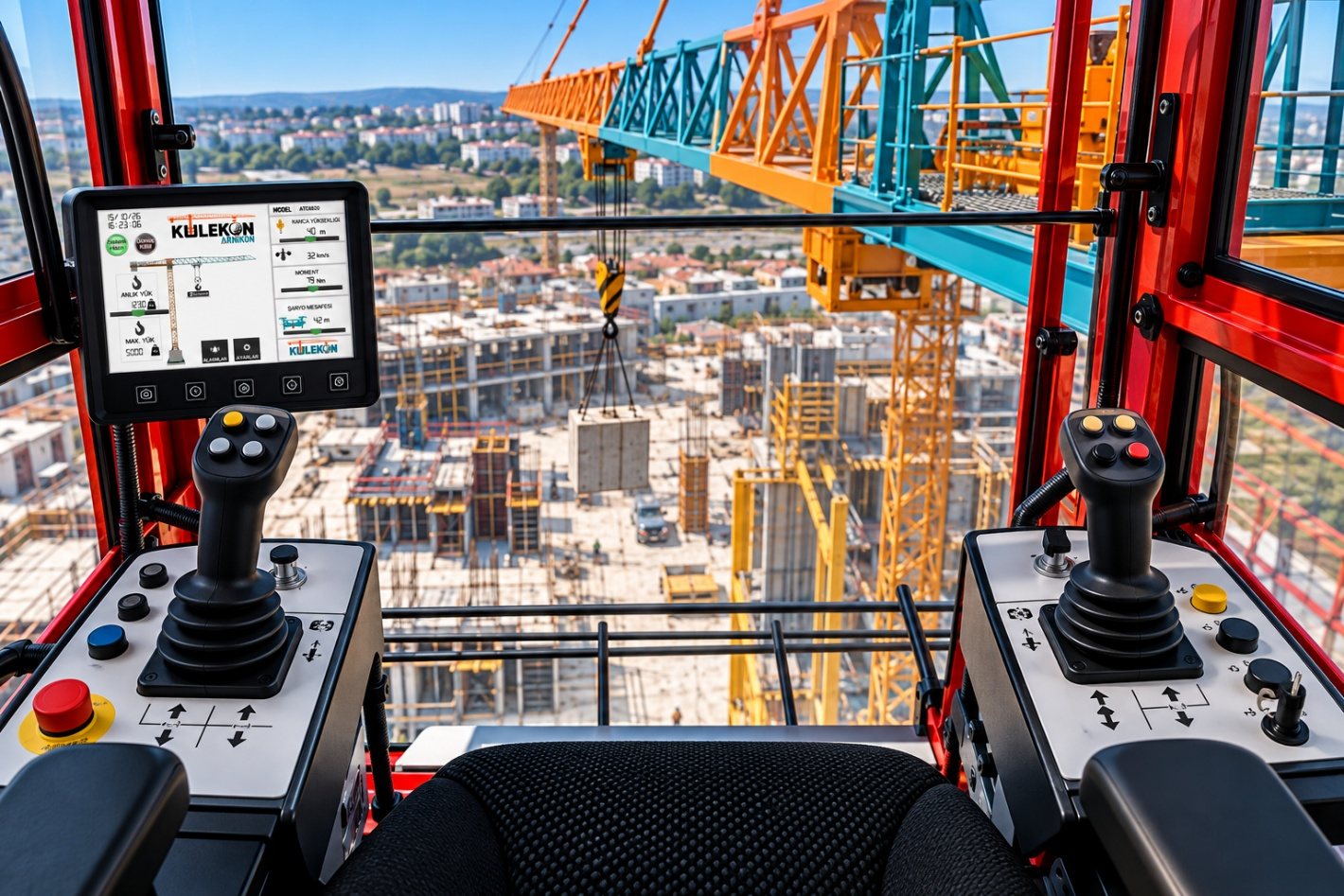
The aim of next-generation automation is not to take the operator out of the loop but to empower them. Key functions include:
- Soft start and stop with frequency inverters: drives provide stepless, shock-free speed control for hoisting, slewing and trolley motions, reducing mechanical fatigue.
- Semi-automatic motion: stored routes between frequently used pick-up and drop points can be followed automatically under the operator’s supervision.
- Remote control and remote operation: operators can now work from the ground or a control room instead of the cab. This reduces the risks of working at height and operator fatigue, but requires a low-latency, fault-tolerant communication infrastructure with certified safety functions.
05Computer vision and artificial intelligence
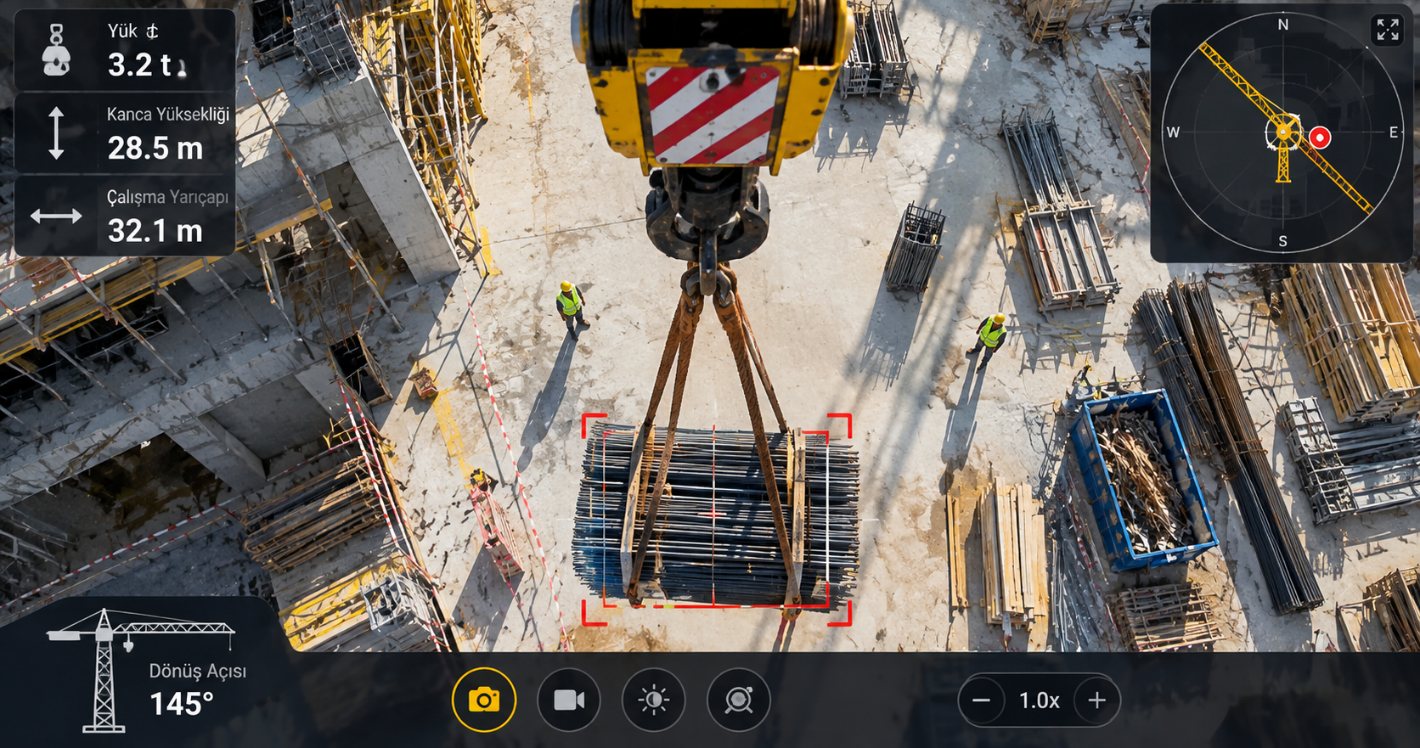
Cameras mounted on the hook and the jib tip bring areas the operator cannot see onto the screen. This way:
- people under the load or in its path can be detected,
- missing personal protective equipment (helmet, vest) can be identified,
- obstacles around the hook and load can be highlighted.
Rather than making stop decisions on their own, these systems should be used to give the operator and the site safety officer an extra layer of awareness. False alarm rates and ambient conditions (dust, rain, light) must always be tested on site.
06IoT, remote monitoring and predictive maintenance
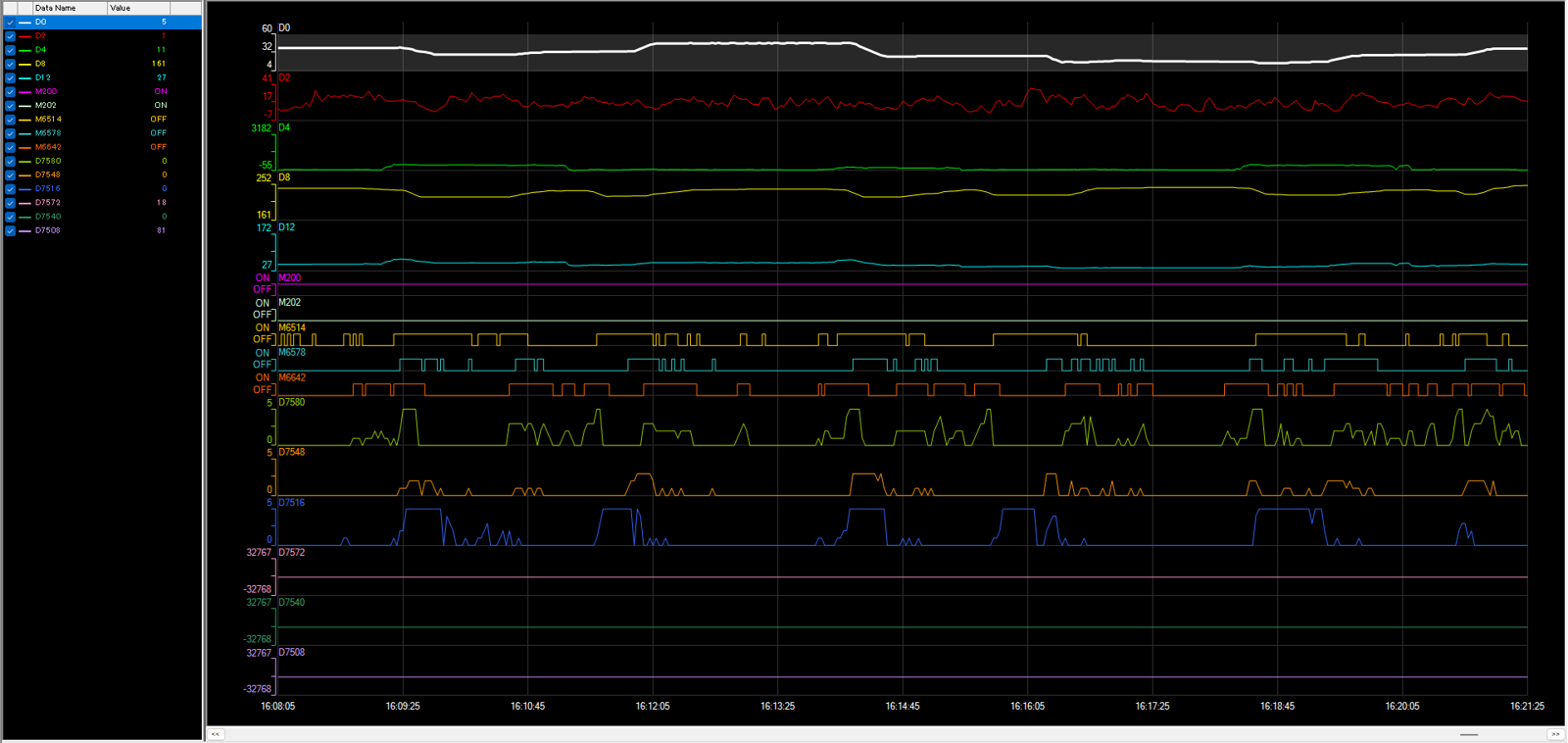
Sensor and controller data from the crane can be transferred to a central platform over GSM or the site network. This enables:
- Real-time monitoring: load, wind, operating hours and alarm history are tracked remotely.
- Predictive maintenance: motor current, temperature, brake wear, rope life and vibration data are analysed to plan intervention before a failure occurs.
- Operating hours and cycle counting: fatigue life and mandatory inspection intervals are managed based on data.
Data security is a critical topic here too: any system with remote access must be protected with network segregation, authentication and authorisation.
07Functional safety and standards
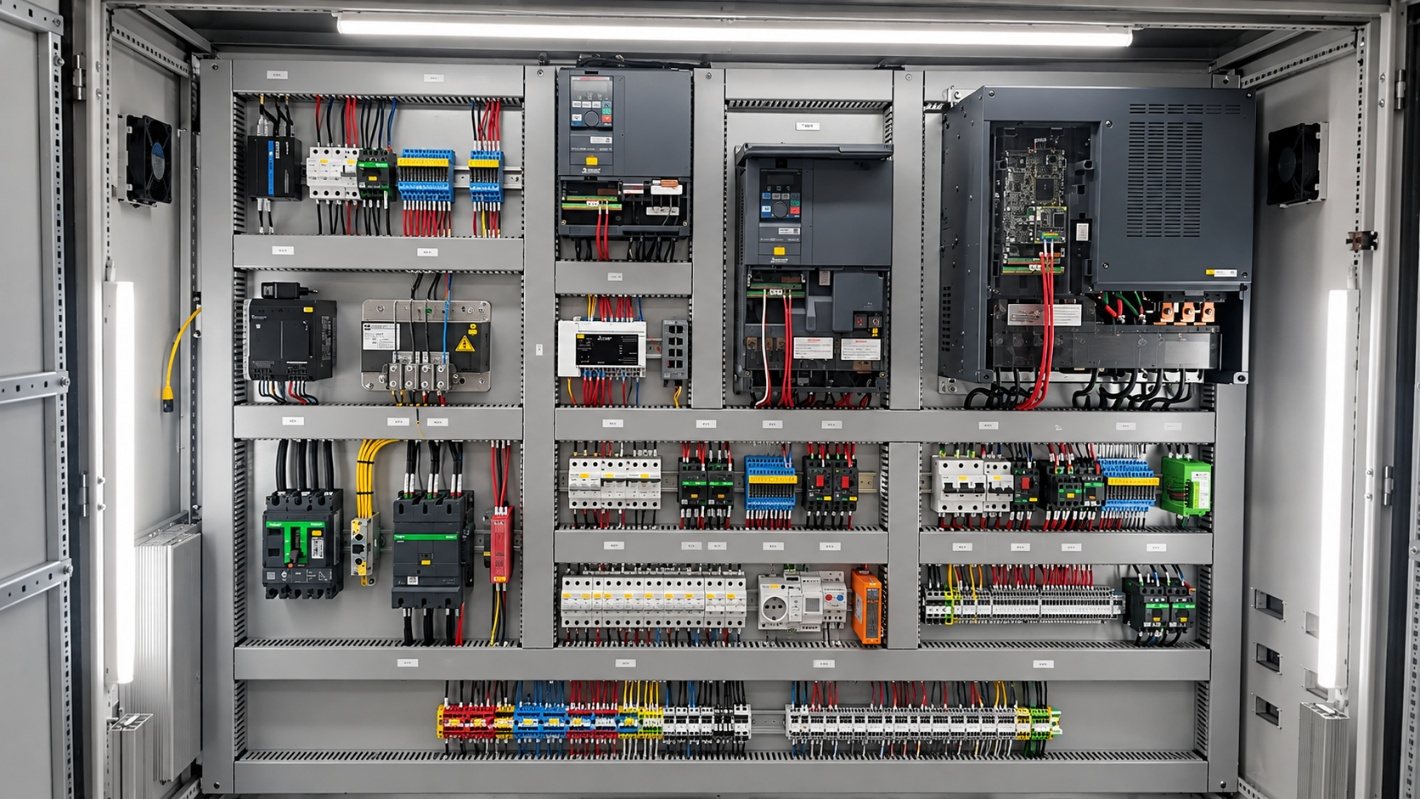
As automation increases, the design of safety functions must become more disciplined. For safety-related functions (such as emergency stop, load limiting and motion restriction), the following frameworks apply:
- Tower crane design and safety requirements: EN 14439 (TS EN 14439 in Türkiye).
- Control systems in machinery safety: ISO 13849 (performance level, PL) and IEC 62061 / IEC 61508 (safety integrity level, SIL).
- Machinery legislation: the Machinery Safety Regulation and related CE requirements.
- Operation and use: periodic inspections and operator competence under the Regulation on Health and Safety Requirements for the Use of Work Equipment.
In short, safety functions should not be treated as a feature “added on” to standard PLC logic, but as a separate safety architecture (safety relays, safety PLCs, redundant sensors, diagnostics). Standard automation is for efficiency; the safety function must be independent and verifiable.
08What to watch out for in practice
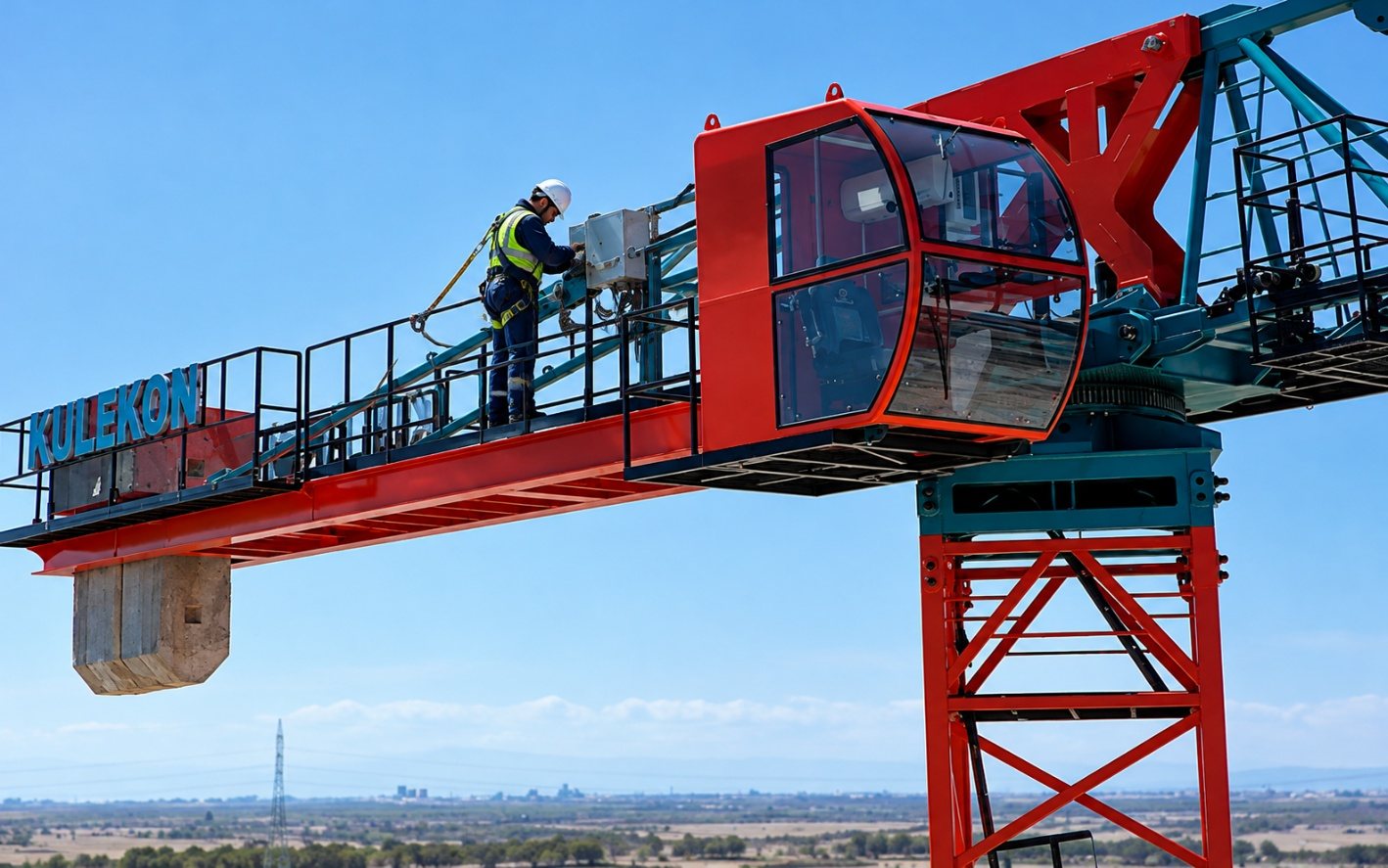
Advanced technology does not deliver the expected benefit unless it is applied correctly on site. In tower crane projects, the following points stand out:
- Installation and commissioning quality: sensor mounting, cabling, earthing and shielding are critical for stable encoder and analogue signals.
- Calibration and verification: load cell, radius and height measurements should be compared with reference values periodically.
- Bypass control: bypassing safety functions is a common source of risk on sites. Systems that manage bypasses with authorisation and logging should be preferred.
- Operator training: new systems do not replace operator skill; operators need to know what the system does, when and why.
- Maintenance and software management: parameter changes, software updates and backups should be logged, and unauthorised changes prevented.
- Failure scenarios: the system’s transition to a safe state in the event of communication loss, sensor failure or power outage must be tested at the design stage.
09Looking ahead
The leading trends are:
What these developments have in common is that the crane is no longer just a mechanical machine, but part of the site’s digital ecosystem.
Conclusion
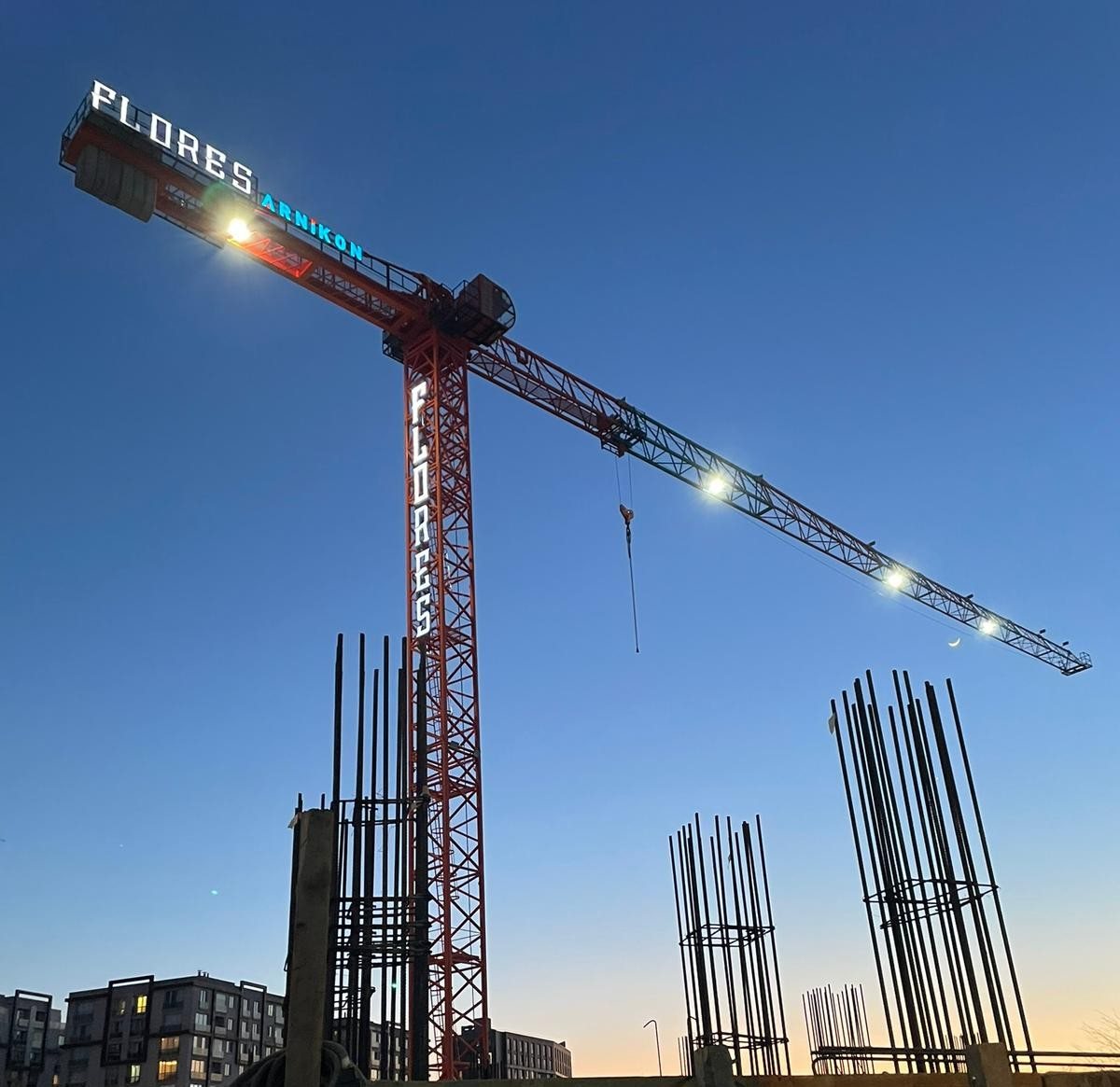
Next-generation automation and safety systems in tower cranes offer powerful tools to reduce accidents, increase productivity and lower maintenance costs. But the key to success is not the technology itself: it is the right design, a standards-compliant safety architecture, careful commissioning, regular maintenance and well-trained operators.
Technology does not replace the human factor; it supports it, catches its mistakes and makes risks visible. On the sites of the future, safety will start not in the crane cab but in the design of the whole system.
Questions about automation and safety?
Contact the Kulekon team about tower crane sales, erection and maintenance, or about automation and safety systems.
